Abdominal wall hernias
Incisional hernia
A hernia at the site of a previous abdominal operation. Planning takes into account the scar, the size of the defect and any prior repairs.
- What is an incisional hernia?
- Symptoms and when to be seen
- Treatment
- Before and after photos
- Recovery: typical ranges
- Care with Dr. Toomari
- Surgical images
- Surgical video
- Questions patients often ask
- Related pages
What is an incisional hernia?
An incisional hernia is a hernia that develops at the site of a previous abdominal operation. Tissue pushes through a weakened area of the scar or the deeper layers of the incision. It can appear months or years after surgery, and the bulge may be small or may involve a long segment of the incision.
Symptoms and when to be seen
A bulge along or under an old scar, often more noticeable when you stand or strain, is the usual sign. Discomfort, a sense of heaviness, or skin irritation can occur. A sudden painful, firm bulge needs urgent care.
When a hernia is an emergency
Call 911 or go to the nearest emergency department if a hernia bulge becomes suddenly painful, firm, red or dark, or cannot be pushed back in, especially with nausea, vomiting, fever, or trouble passing gas or stool. These can be signs that the hernia is trapped and its blood supply is at risk.
Learn the difference between a reducible and an incarcerated hernia and what hernia strangulation means.
Treatment
Repair is individualized. Smaller defects may be closed with an open or minimally invasive approach, often with mesh. Larger, recurrent or more complex incisional hernias may require abdominal wall reconstruction. Prior mesh, infection or multiple operations are part of the planning discussion.
Before and after photos
These photos show a woman Dr. Toomari treated with robotic surgery for an incisional hernia along a C-section scar, together with diastasis recti, before surgery and at a follow-up visit. They are cropped to the abdomen so no patient can be identified.
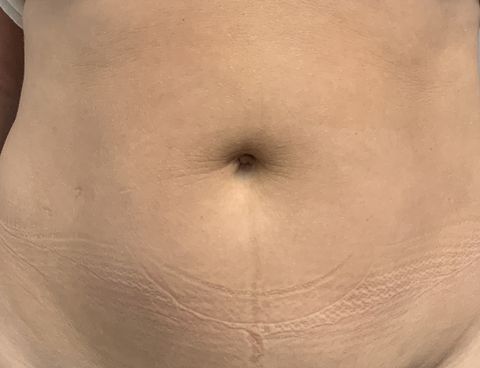
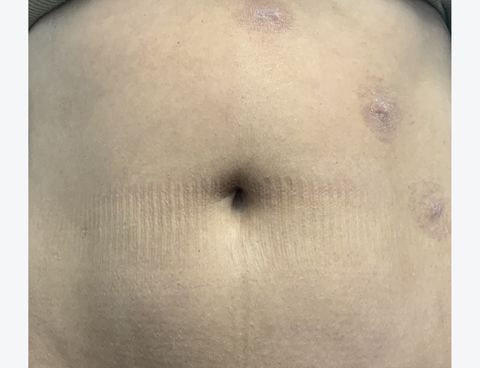
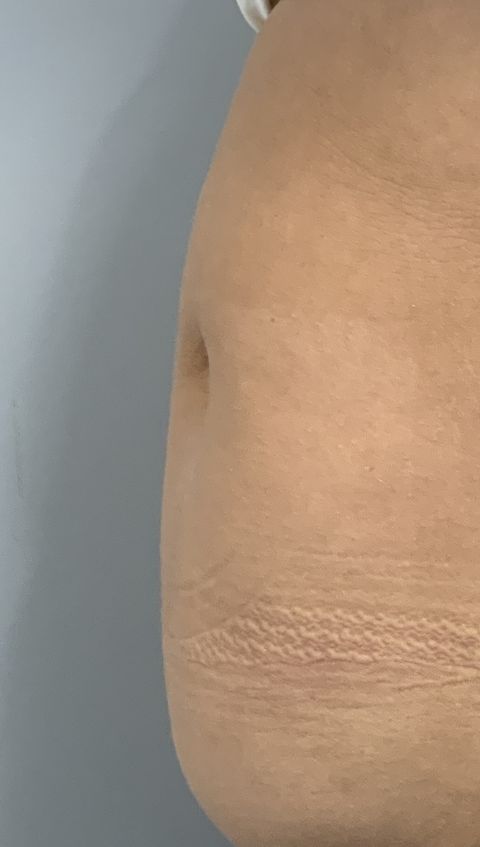
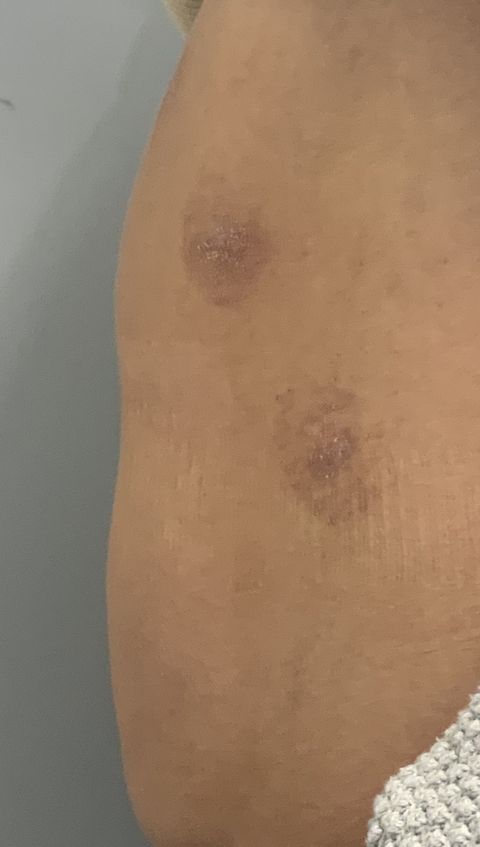
Photos shared with patient permission. Individual results vary.
Recovery: typical ranges
Recovery after incisional hernia repair varies widely with the size of the defect and the operation. Some patients go home the same day or the next day; larger reconstructions may involve a short hospital stay. Heavy lifting is typically limited for 8 weeks (no lifting over 10 lb), and sometimes longer after a larger reconstruction. Your surgeon will give you instructions for your repair.
These are typical ranges only. Recovery varies with the hernia, the type of repair, your health and the work or activity you return to. Dr. Toomari will advise you on walking, lifting, driving and follow-up for your situation.
Care with Dr. Toomari
Dr. Nojan Toomari, DO, FACS, is a board-certified general surgeon and Director of Robotic Surgery at Dignity Health – Northridge Hospital Medical Center, and President and Founder of LA Hernia Center (est. 2014). He has been in private practice in Encino since 2014 and has performed more than 2,200 robotic procedures. He offers open, laparoscopic and robot-assisted laparoscopic repair, and will explain which approach, if any, fits your hernia and your health. Not every hernia needs surgery right away.
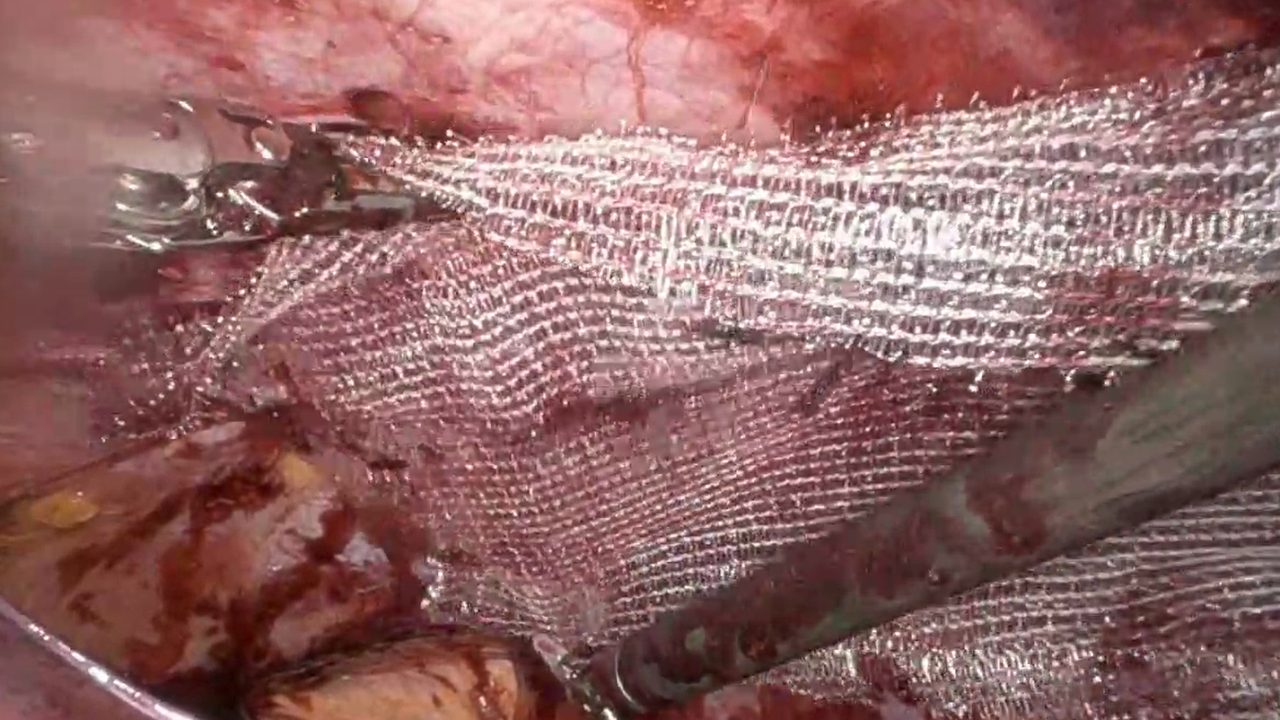
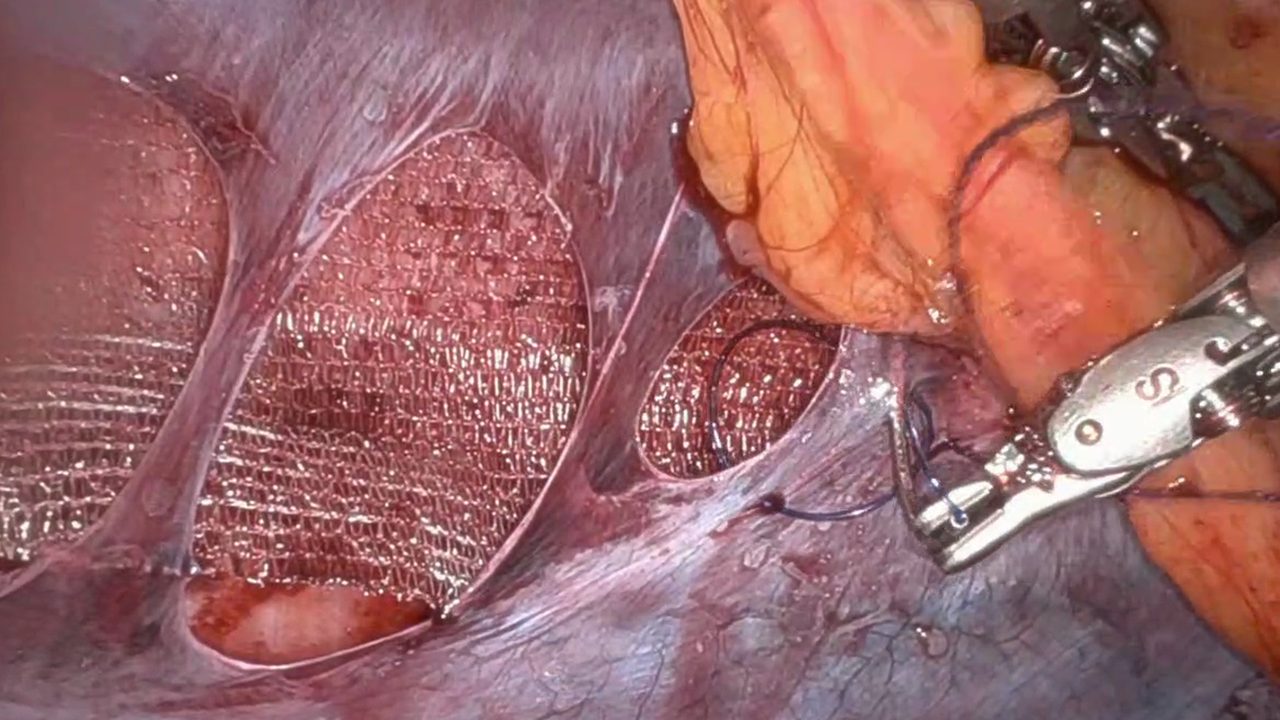
Surgical images
These de-identified intraoperative stills are from Dr. Toomari’s robotic cases. They are educational, contain surgical views, and do not show every patient’s operation.
Surgical video
These videos are from Dr. Toomari’s YouTube channel and contain surgical footage. They are educational and do not show every patient’s operation or result.
Questions patients often ask
Why do incisional hernias form?
Any abdominal incision is a potential weak area. Infection, strain, coughing, obesity, smoking, malnutrition or a prior emergency operation can raise the chance that a hernia will form, but incisional hernias also occur without an obvious cause.
If I had a hernia after one surgery, will it come back?
A prior incisional hernia does not mean a new repair will fail, but recurrent and larger defects sometimes need a more comprehensive plan, including reconstruction. That is one reason a careful exam and, when needed, imaging matter before surgery.
Related pages
Talk with our office about your hernia
The quickest way to request a consultation is to call. Our staff can explain next steps and what to bring.