Diastasis recti
Diastasis recti in women
Separation of the abdominal muscles after pregnancy is common. Many women improve with time and rehabilitation. When a gap or a hernia remains, Dr. Toomari explains the options, including how a future pregnancy fits into the plan.
- Diastasis recti after pregnancy
- Multiple pregnancies
- C-section and diastasis
- Umbilical hernia with diastasis
- Pelvic floor and core rehabilitation
- Timing after pregnancy and future pregnancy
- Symptoms and evaluation
- Dr. Toomari’s robotic approach
- Not a tummy tuck
- Before and after photos
- Insurance
- Recovery: typical ranges
- Care with Dr. Toomari
- References
- Questions patients often ask
- Related pages
Diastasis recti after pregnancy
During pregnancy the growing uterus stretches the abdominal wall. The band of tissue between the two rectus (“six-pack”) muscles, the linea alba, widens and thins so the muscles move apart. This is diastasis recti. It is a normal change in pregnancy and is not a true hernia, because there is no hole through the abdominal wall.
For many women the gap narrows in the months after delivery. For others it persists, and the abdomen may look rounded or “still pregnant,” dome or cone along the midline when sitting up, or feel weak.
Read the diastasis recti overview for how diastasis differs from a hernia in general.
Multiple pregnancies
The abdominal wall is stretched again with each pregnancy. A separation that improved after a first baby may be wider after a second or third, and carrying twins or a larger baby stretches the midline further. Telling Dr. Toomari how many pregnancies you have had, and whether you plan more, helps him plan.
C-section and diastasis
Diastasis recti is caused by the stretching of pregnancy, not by the type of delivery. A cesarean incision is a separate issue: the deeper layers can heal with a weak spot and form a C-section hernia along the scar. A soft fold of skin and fat above the scar is also common and is not a hernia.
A diastasis, a C-section hernia and an umbilical hernia can be present at the same time. An exam, and sometimes an ultrasound or CT scan, tells them apart.
Umbilical hernia with diastasis
A bulge at the belly button after pregnancy can be an umbilical hernia sitting within a diastasis. When an umbilical or ventral hernia sits within a significant diastasis, repairing only the small hernia leaves the surrounding midline stretched. In that situation, repairing the hernia and bringing the separated muscles back toward the midline in the same operation may be discussed. Not everyone with both conditions needs this, and the plan is individual.
Pelvic floor and core rehabilitation
Physical therapy, core retraining and activity changes are reasonable first steps for many women, especially when there is no hernia and the separation is modest. A pelvic floor or abdominal rehabilitation physical therapist can help individualize your program. Tell your care team about pelvic pressure, urinary leakage or other pelvic floor symptoms.
Our diastasis recti core exercise guide lists gentle exercises, with reps and holds. Exercise can improve core strength and function, but it cannot reliably close every significant separation or repair a hernia.
Timing after pregnancy and future pregnancy
Surgery is usually not the first step soon after delivery, because the abdominal wall often keeps recovering for months and rehabilitation deserves a fair trial first. Dr. Toomari usually discusses repair about 6–12 months after delivery, depending on how the abdomen has recovered. Some women are asked to reach a body mass index (BMI) under 30 before surgery.
A later pregnancy can stretch the abdominal wall again and strain a repair. If you plan to become pregnant again, repair of diastasis alone is usually discussed after your final pregnancy. A hernia that is painful, growing or at risk of trapping tissue may be repaired sooner. This is a shared decision.
Symptoms and evaluation
Women often notice a ridge or coning along the midline when they sit up, a softer or bulging abdomen, back or core discomfort, or a bulge at the navel. Dr. Toomari can usually assess the separation in the office and, when needed, use imaging such as a CT scan to look for a hernia and plan treatment.
When a hernia is an emergency
Call 911 or go to the nearest emergency department if a hernia bulge becomes suddenly painful, firm, red or dark, or cannot be pushed back in, especially with nausea, vomiting, fever, or trouble passing gas or stool. These can be signs that the hernia is trapped and its blood supply is at risk.
Learn the difference between a reducible and an incarcerated hernia and what hernia strangulation means.
Dr. Toomari’s robotic approach
When surgery is appropriate, Dr. Toomari uses a robotic, minimally invasive approach. When it is safe for your anatomy, he works in the preperitoneal plane, the same TAPP-style approach he uses for ventral and umbilical hernias: the hernia is repaired, the separated midline is brought back together with sutures, and mesh is placed between the muscle and the peritoneum, with the peritoneal flap closed over it so the mesh stays out of the abdominal cavity.
See TAPP vs IPOM: where the mesh goes for a diagram. Open repair is sometimes the better fit, and Dr. Toomari will explain why if so.
Not a tummy tuck
A minimally invasive diastasis repair works on the muscles and the hernia from the inside. It does not remove skin. If loose skin or stretch marks after pregnancy are the main concern, a plastic-surgery discussion may be more appropriate.
Before and after photos
These photos show women Dr. Toomari treated with robotic surgery for diastasis recti with an umbilical hernia, or with a hernia along a C-section scar, before surgery and at a follow-up visit. They are cropped to the abdomen so no patient can be identified.
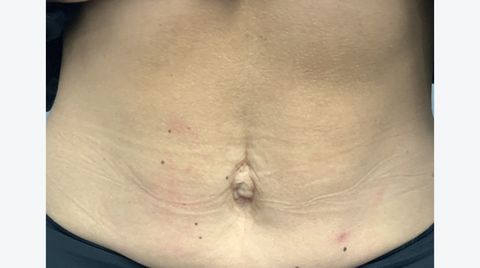
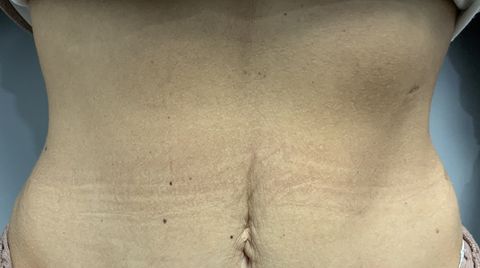
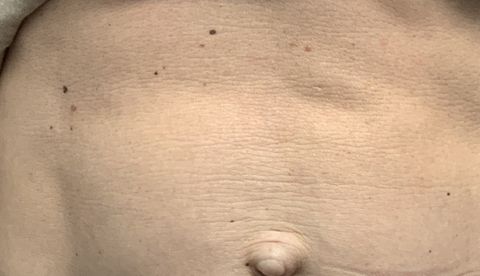
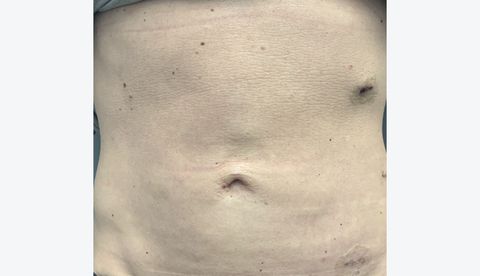
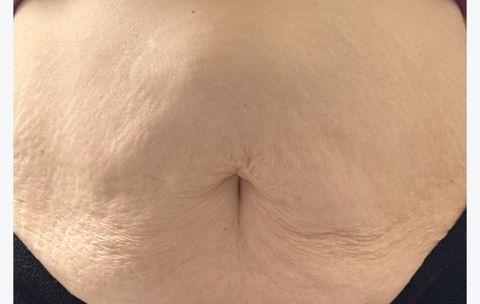
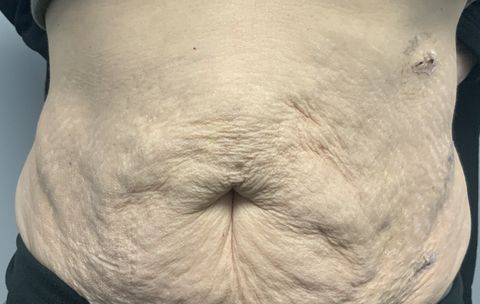
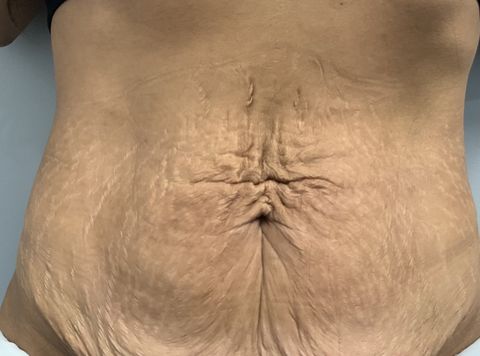
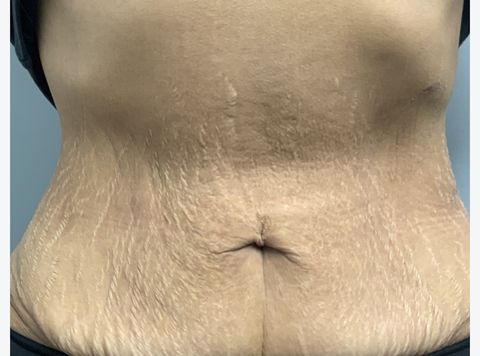
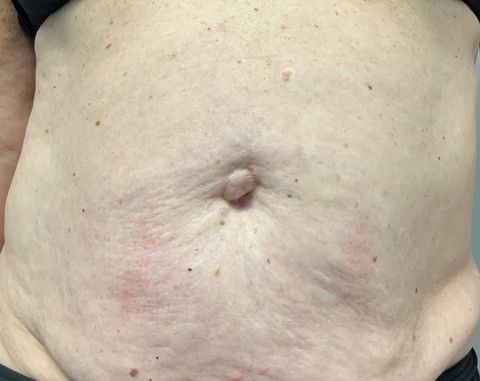
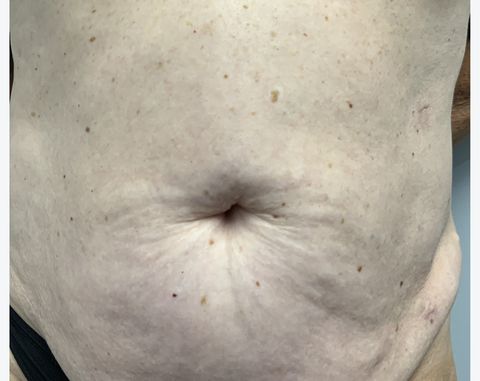
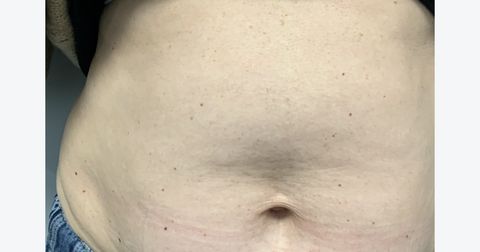
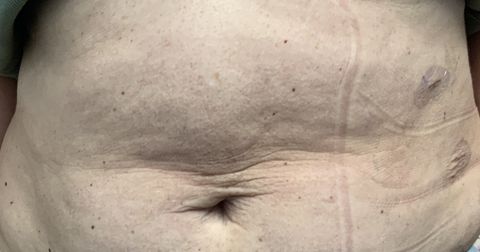
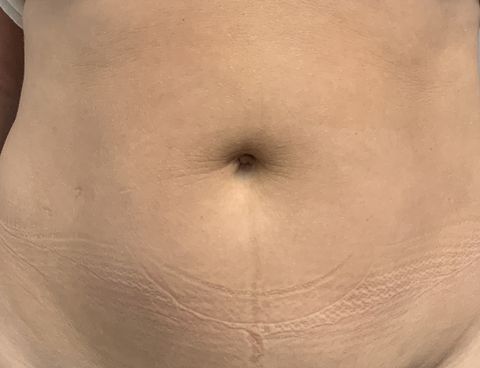
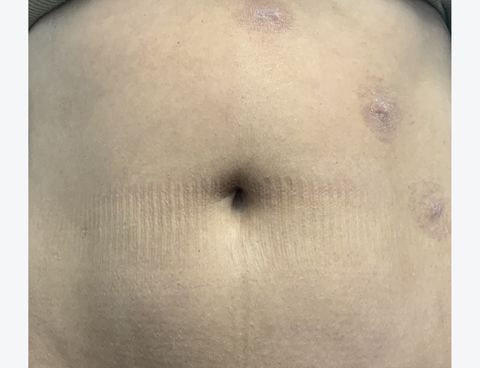
Photos shared with patient permission. Individual results vary.
Insurance
Insurance often doesn't cover diastasis repair. It can depend on your plan and on whether a hernia or another medical problem is present. Please call the office at (818) 570-1845 to talk about coverage before you schedule surgery.
Recovery: typical ranges
After a minimally invasive repair, many people walk the same day and return to light activity over one to two weeks. Heavy lifting and core strain, including lifting young children, are typically limited for 8 weeks (no lifting over 10 lb), so plan for help at home. Your surgeon will give you instructions for your repair.
These are typical ranges only. Recovery varies with the hernia, the type of repair, your health and the work or activity you return to. They are not a promise of how you will feel or when you can return to a specific activity. Dr. Toomari will advise you on walking, lifting, driving and follow-up for your situation.
Care with Dr. Toomari
Dr. Toomari evaluates diastasis recti and abdominal wall hernias at our Encino office for women across the San Fernando Valley and Los Angeles.
Dr. Nojan Toomari, DO, FACS, is a board-certified general surgeon and Director of Robotic Surgery at Dignity Health – Northridge Hospital Medical Center, and President and Founder of LA Hernia Center (est. 2014). He has been in private practice in Encino since 2014 and has performed more than 2,200 robotic procedures. He offers open, laparoscopic and robot-assisted laparoscopic repair, and will explain which approach, if any, fits your hernia and your health. Not every hernia needs surgery right away.
References
- Hernández-Granados P, Henriksen NA, Berrevoet F, et al. European Hernia Society guidelines on management of rectus diastasis. British Journal of Surgery. 2021;108:1189–1191. Accessed November 19, 2026.
This guideline informs the general information on this page. It is not a substitute for an individual evaluation.
Questions patients often ask
Will my diastasis go away on its own after pregnancy?
For many women the separation narrows in the months after delivery, and core and pelvic floor rehabilitation can help. It does not close for everyone. If a gap, bulging or discomfort remains after a genuine trial of therapy, an evaluation is reasonable.
Did my C-section cause my diastasis?
Diastasis recti comes from the stretching of pregnancy, whether you deliver vaginally or by cesarean. A C-section can, however, leave a weak spot along the scar, and a C-section hernia and a diastasis can be present at the same time. An exam, and sometimes imaging, tells them apart.
Should I wait until I am done having children?
Often, yes. A later pregnancy stretches the abdominal wall again and can strain a repair, so surgery for diastasis alone is usually discussed once you have finished having children. A hernia that is painful, growing or at risk of trapping tissue may be repaired sooner. This is a shared decision made with you.
Is diastasis repair the same as a tummy tuck or mommy makeover?
No. A tummy tuck is a plastic-surgery operation that removes skin and often tightens the muscles through a long lower incision. A minimally invasive diastasis repair addresses the muscle separation, and a hernia when one is present, from the inside. It does not remove loose skin.
How long is lifting limited after repair?
Heavy lifting and core strain, including lifting young children, are typically limited for 8 weeks (no lifting over 10 lb) after diastasis repair with a hernia repair. Plan for help at home during that time. Your surgeon will give you instructions for your repair.
Related pages
Talk with our office about your hernia
The quickest way to request a consultation is to call. Our staff can explain next steps and what to bring.