Abdominal wall hernias
Umbilical (belly button) hernia
A bulge at or near the navel. Some can be watched; others are repaired with an approach chosen for the hernia and your health.
- What is an umbilical hernia?
- Symptoms and when to be seen
- Treatment
- Before and after photos
- Recovery: typical ranges
- Care with Dr. Toomari
- Surgical video
- Questions patients often ask
- Related pages
What is an umbilical hernia?
An umbilical hernia is a bulge at or near the belly button (navel). It occurs when tissue pushes through a weak area of the abdominal wall at the umbilicus. Adults can develop one after pregnancy, weight changes, strain or prior surgery; some people have had a weakness there since childhood.
Symptoms and when to be seen
The usual sign is a soft bulge at the navel that may enlarge with coughing or standing. Some people have only a cosmetic concern; others have pain or tenderness. A firm, painful, discolored bulge, especially with nausea, is an emergency.
When a hernia is an emergency
Call 911 or go to the nearest emergency department if a hernia bulge becomes suddenly painful, firm, red or dark, or cannot be pushed back in, especially with nausea, vomiting, fever, or trouble passing gas or stool. These can be signs that the hernia is trapped and its blood supply is at risk.
Learn the difference between a reducible and an incarcerated hernia and what hernia strangulation means.
Treatment
Small, asymptomatic hernias may be observed after an exam. When repair is appropriate, the defect is closed, often with mesh for larger hernias, using an open, laparoscopic or robot-assisted approach. If diastasis recti is also present, repairing both together may be discussed. Where the mesh sits also matters; see TAPP vs IPOM: where the mesh goes.
Before and after photos
These photos show patients Dr. Toomari treated for an umbilical hernia, before surgery and at a follow-up visit. They are cropped to the abdomen so no patient can be identified.
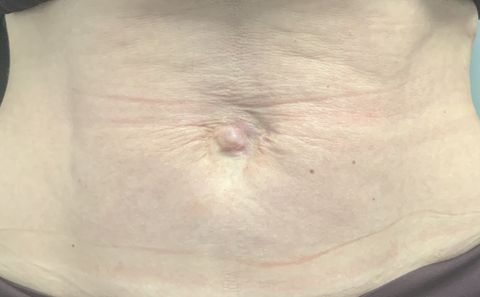
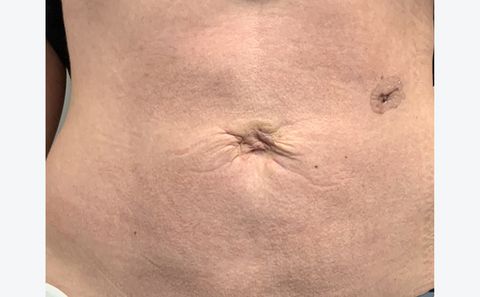
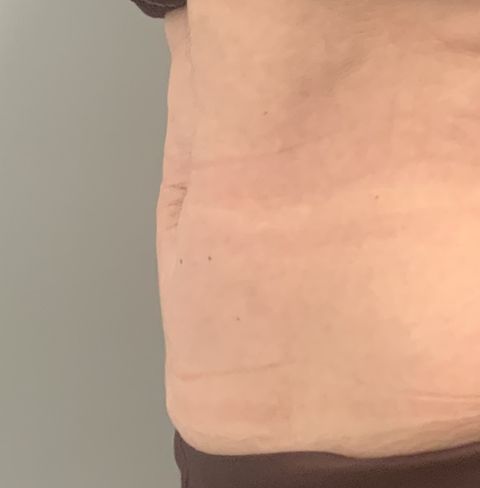
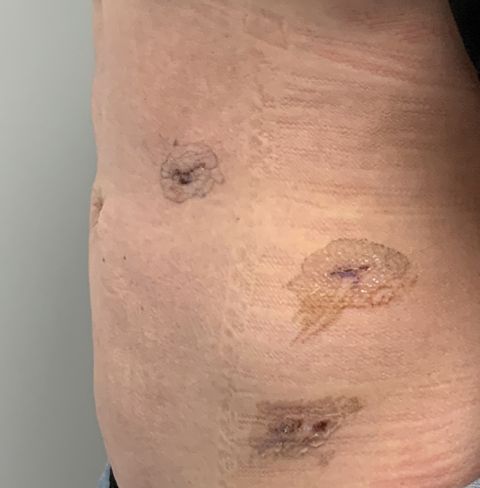

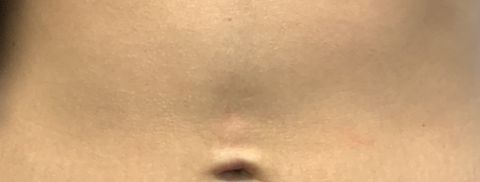
Photos shared with patient permission. Individual results vary.
Recovery: typical ranges
Many people go home the same day. Light activity often resumes within several days to a couple of weeks. Heavy lifting is typically limited for 8 weeks (no lifting over 10 lb). Your instructions will depend on the size of the hernia and the repair.
These are typical ranges only. Recovery varies with the hernia, the type of repair, your health and the work or activity you return to. Dr. Toomari will advise you on walking, lifting, driving and follow-up for your situation.
Care with Dr. Toomari
Dr. Nojan Toomari, DO, FACS, is a board-certified general surgeon and Director of Robotic Surgery at Dignity Health – Northridge Hospital Medical Center, and President and Founder of LA Hernia Center (est. 2014). He has been in private practice in Encino since 2014 and has performed more than 2,200 robotic procedures. He offers open, laparoscopic and robot-assisted laparoscopic repair, and will explain which approach, if any, fits your hernia and your health. Not every hernia needs surgery right away.
Surgical video
These videos are from Dr. Toomari’s YouTube channel and contain surgical footage. They are educational and do not show every patient’s operation or result.
Questions patients often ask
Do umbilical hernias in adults go away?
In adults, an umbilical hernia typically does not close on its own. In infants, some small umbilical hernias do close in early childhood; that is a different situation and is usually followed by a pediatric clinician.
Is a bulge at the navel always a hernia?
Not always. Soft swelling can have other causes, and diastasis recti can be mistaken for a hernia. An exam — and imaging when it is needed — can tell the difference and check whether a hernia and muscle separation are both present.
Related pages
Talk with our office about your hernia
The quickest way to request a consultation is to call. Our staff can explain next steps and what to bring.